
Strawberry farming in India: why the variety you plant decides the profit you keep
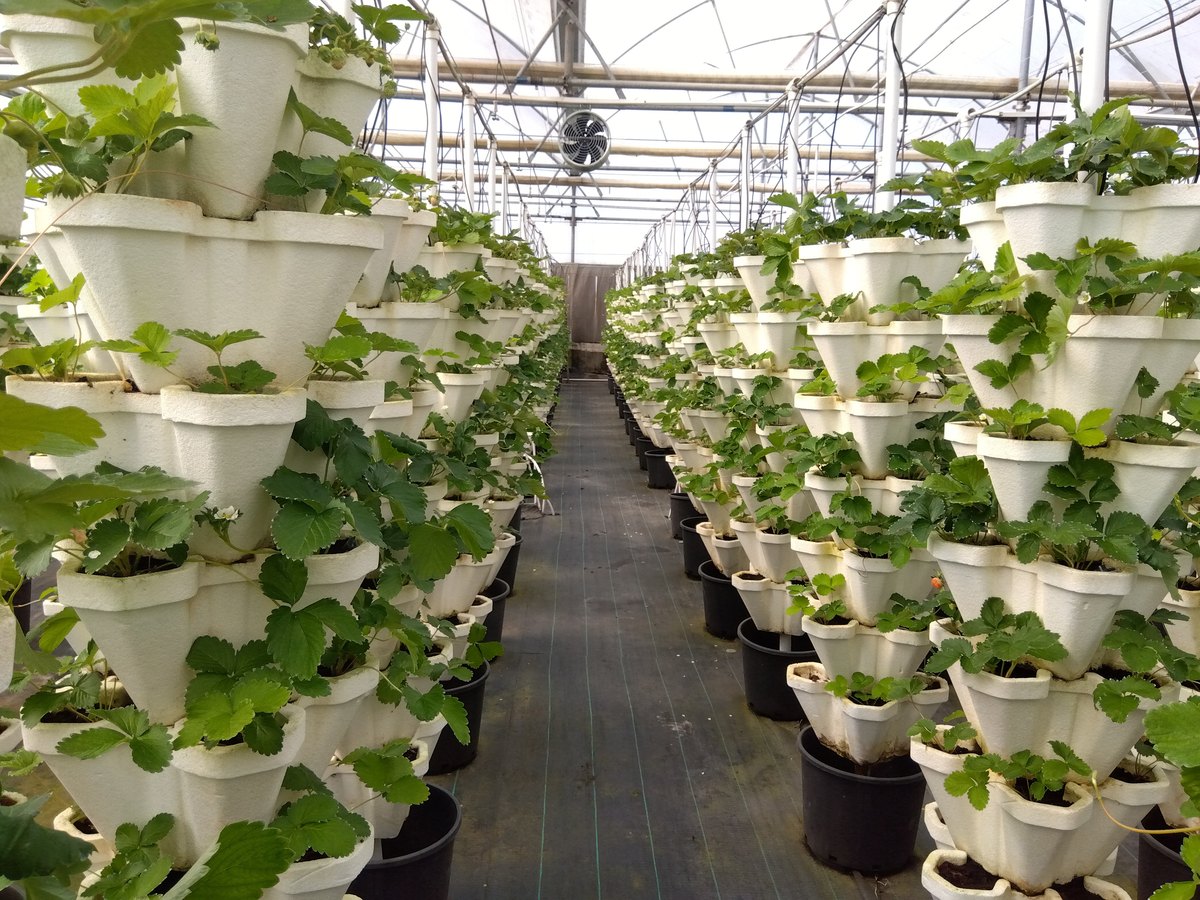
Strawberry farming in India is one of those numbers that looks irresistible on a slide. Industry estimates put a single acre at roughly 8–20 tonnes of fruit, selling somewhere around ₹150–250 per kg, against a cultivation cost that ranges from a few lakh for a simple low-tunnel setup to far more for a full polyhouse. The headline figures — “earn several lakh per acre” — are real enough that a new strawberry grower appears in Maharashtra, Himachal, Haryana or the Nilgiris every season.
But two growers on the same hillside, with the same acre and the same effort, routinely see very different returns. The variable that decides it is rarely labour or luck. It’s what you plant, and what happens to it after you pick.
The opportunity is real — and crowded at the bottom
Most strawberries grown in India are a short list of workhorse varieties — Winter Dawn, Camarosa, Nabila, Sweet Charlie, Chandler — bred for yield, size and shelf life. They exist to produce a heavy crop that survives the trip to a mandi. And that is exactly the problem with the economics: a commodity berry sold into a commodity market competes on one axis only — price per kg, racing downward as everyone’s crop ripens in the same January window.
You can be an excellent grower and still be a price-taker, because the variety you chose put you in a price-taker’s market.
The lever most guides skip: variety
The profit on an acre isn’t only “how many kilos.” It’s kilos × the price each kilo actually realises — and price is set largely by who your buyer is, which is set largely by your variety.
Japanese F1 cultivars are bred for the opposite of the workhorses. ICHIGO grows Miyoshi & Co’s Berry Pop F1 series — SAKURA (sweetness and aroma) and HARUHI (sugar–acid balance, year-round consistency) — selected for flavour, Brix and dessert performance rather than transport. Full-ripe SAKURA reads around 11–12.3 °Brix, well above the 7–9° of a typical supermarket berry. That is a fruit a pastry chef or a hotel will pay a premium for — a different buyer, off the mandi price curve entirely.
The grower’s question changes from “how do I grow more kilos?” to “how do I grow a kilo someone will pay a premium for?”
Seed, not runner — why that matters to a grower
There’s a practical reason “Japanese strawberries, grown in India” is even possible. Berry Pop is delivered as F1 seed, not as live transplants. Many countries — India included — restrict importing live strawberry plants from Japan, but seed travels. For a grower that means access to Japanese genetics without depending on imported runners, and a cleaner, more predictable starting material.
Protected cultivation and the part nobody photographs
Genetics set the ceiling; method and handling decide how much of it you keep.
- Protected cultivation — ICHIGO’s Vertigrow vertical-hydroponic polyhouse model (run with our partner HiMedia Laboratories) aims at higher yield per m², cleaner fruit and no contact with soil pests, under documented Japanese agronomy.
- The cold chain — a premium berry only earns a premium price if it arrives like one. Pre-cooling within about two hours of harvest is the difference between a dessert-grade punnet and a warm-hauled berry that becomes a commodity again the moment it softens.
A grower who nails the variety but loses the fruit to a warm truck has, in price terms, grown Winter Dawn.
If you’re thinking about growing
The honest version of the strawberry-farming pitch isn’t “plant strawberries, earn lakhs.” It’s: decide your buyer first, then choose the variety and the handling that reach them. Commodity volume to the mandi is one business. Premium, Brix-verified, cold-chain fruit to chefs and hotels is a different one — smaller in kilos, often larger in rupees per kilo.
ICHIGO works with growers on exactly that second model — Japanese F1 cultivars, a documented protocol, and pooled cold-chain routes that carry premium fruit to premium buyers.
→ Interested in growing premium Japanese strawberries, or partnering on a plot? Talk to us about a farm partnership on our contact page.
- 📞 Ishita Shroff — +91 98314 79900
- 📞 Mitesh Furia — +91 98207 73767
- ✉️ contact@m2-labo.in
ICHIGO® — Japanese strawberry cultivars (Miyoshi Berry Pop F1 SAKURA & HARUHI), grown in India. Produced by M2labo (M2labo Bharat Pvt. Ltd.).
Japanese strawberry quality, grown in India's hills.
Restaurants, hotels and retailers — tell us your volumes and we will quote.